Industrial powder coating provides manufacturers with an attractive, durable finish when the coating process is properly controlled. However, even a well-equipped production facility can experience defects that affect product appearance, coating performance, production schedules and operating costs.
Problems such as orange peel, pinholes, poor adhesion, uneven coverage and contamination can lead to rejected products, additional labour and costly rework. When these defects occur repeatedly, the issue may extend beyond the powder itself. The underlying cause could involve surface preparation, application equipment, part grounding, material handling or curing conditions.
For manufacturers looking to improve consistency, understanding the relationship between coating defects and the overall finishing process is essential. A systematic approach can help identify the source of a problem before unnecessary adjustments are made.
At
CMC Consultants LLC, industrial paint finishing systems are the focus of system design, process evaluation and technical consulting. Understanding how the individual stages of a finishing line work together is an important step toward improving quality and operational performance.
1. Orange Peel: An Uneven or Textured Finish
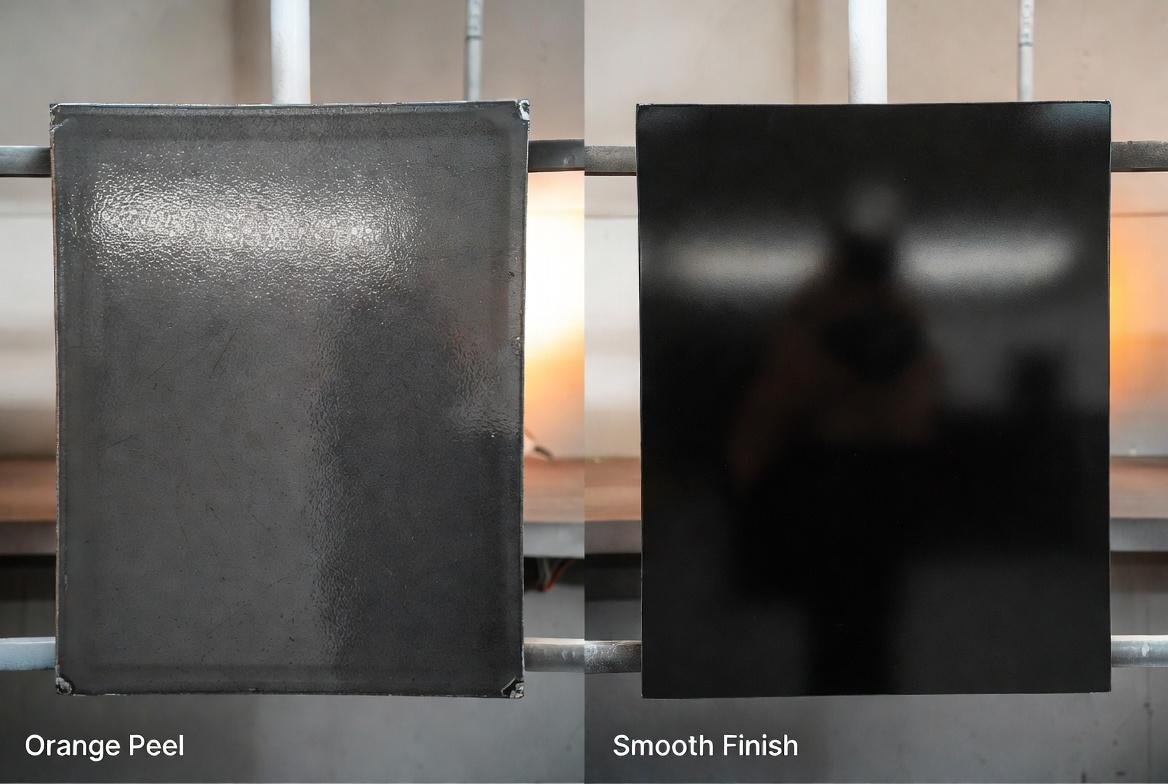
Orange peel is a common appearance defect in powder coating. The finished surface resembles the uneven texture of an orange rather than a smooth, uniform coating.
Although the coating may cover the entire component, the inconsistent surface can affect its appearance and may indicate that the application or curing process needs attention.
**Possible causes include:**
- Powder film thickness outside the recommended range.
- Inappropriate application settings or spray technique.
- Inadequate or inconsistent curing conditions.
- Differences in the substrate, powder formulation or component geometry.
- Changes in the production process that affect coating flow and levelling.
**How manufacturers can prevent it**
Begin by checking the coating manufacturer's technical requirements and measuring the actual film thickness. Review the spray equipment settings and verify the curing conditions experienced by the component itself, rather than relying exclusively on the oven's displayed temperature.
Avoid increasing oven temperature or changing application settings without understanding the cause. A change that improves appearance could create other problems if the coating is no longer processed within its specified operating conditions.
When orange peel occurs across several product types or production runs, assess the entire application and curing process rather than treating every rejected part as an isolated incident.
2. Pinholes and Outgassing
Pinholes are small openings in the coating film. In some cases, the surface may also contain tiny bubbles or craters that remain after the coating has cured.
These defects can occur when trapped gases or moisture escape from the substrate during processing. Porous castings, weld areas, galvanised components and improperly prepared surfaces may require particular attention.
Other contributing factors can include contamination, unsuitable pretreatment or process conditions that do not allow the coating to form a consistent film.
**How manufacturers can prevent them**
First, examine where the defects occur. If pinholes appear mainly around welds, castings or specific component features, investigate those areas before changing the entire production process.
Review cleaning and drying procedures, substrate condition, pretreatment effectiveness and the curing profile. Where appropriate, evaluate whether a supplier-approved degassing or preheating procedure is suitable for the material.
The correct solution depends on the substrate, coating system and production conditions. A defect concentrated in particular component features requires a different investigation from one that appears randomly across the entire batch.
3. Poor Adhesion and Peeling
A coating must bond adequately to the substrate to deliver its intended performance. When adhesion fails, the coating may peel, flake, lift around edges or separate from the component during handling or service.
Poor adhesion is especially concerning when the coated product must withstand moisture, abrasion, chemicals, temperature changes or outdoor exposure.
Common causes include inadequate cleaning, unsuitable pretreatment, surface contamination, poor grounding during powder application, and curing conditions that do not meet the coating manufacturer's requirements.
**How manufacturers can prevent it**
Inspect the complete preparation process, including degreasing, rinsing, drying and any required chemical pretreatment. Confirm that the process is appropriate for the substrate and the coating specification.
Review grounding and application conditions where powder deposition is involved. Also verify that the coating has experienced the required part-temperature and curing time.
Adhesion testing should follow the relevant product specification and accepted test method. Do not assume that a coating is adequately bonded simply because it looks smooth immediately after curing.
For recurring adhesion failures, a structured review of the
industrial finishing system and its process requirements can help determine where corrective action is needed.
4. Fisheyes, Craters and Surface Contamination
Fisheyes and craters appear as small circular depressions in the coating. They can occur when contaminants interfere with the coating's ability to spread and form a uniform film.
Potential sources include oil, silicone, grease, contaminated compressed air, dirty work surfaces, residue on incoming components or unsuitable handling practices.
Contamination can be difficult to trace because it may originate outside the coating booth. A lubricant, cleaning product or maintenance activity elsewhere in the facility may introduce a substance that eventually affects the finish.
**How manufacturers can prevent it**
Inspect the affected components and identify whether the defects appear in particular locations, batches or shifts. Review compressed-air filtration and drying, equipment cleanliness, cleaning materials and the handling of prepared components.
Establish clear rules for products and activities that may introduce contamination near the finishing line. Include regular inspection of filters, air lines and other equipment that can affect coating quality.
Avoid repeatedly recoating defective parts without identifying the source. Rework may improve individual components temporarily, but the underlying contamination can continue to affect production.
5. Uneven Coverage and Thin Coating Areas
Uneven coverage occurs when some sections of a component receive insufficient coating while other areas may receive excessive material. This can create visible differences in colour, appearance, texture or protective performance.
The problem is particularly common on complex parts containing recesses, internal corners, edges, narrow channels and areas that are difficult for the spray equipment to reach.
Possible causes include inconsistent spray technique, unsuitable gun settings, poor grounding, inappropriate component positioning and limitations in the equipment's ability to reach complex geometries.
**How manufacturers can prevent it**
Review the component's shape, orientation and movement through the application area. Examine spray-gun positioning, application settings, grounding contacts and the condition of the equipment.
Where automated equipment is used, check whether the programmed movement and gun arrangement suit the products currently being manufactured.
Film-thickness measurements at multiple locations can reveal whether the problem is isolated to certain features or affects the whole component. Use these findings to guide adjustments rather than relying on visual inspection alone.
Manufacturers should also consider whether changes in product design have made an existing application system less suitable for current production requirements.
6. Inconsistent Colour, Gloss or Surface Appearance
Customers often judge a finished product by the consistency of its appearance. Differences in colour, gloss or surface texture between components can therefore become a significant quality issue, especially in products assembled from multiple coated parts.
Appearance variations may result from inconsistent film thickness, different curing histories, powder handling issues, contamination or variations between coating batches.
In some cases, the problem may be related to the coating material itself. In others, the same powder may produce different results because process conditions are not consistent.
**How manufacturers can prevent it**
Maintain documented procedures for powder storage, handling, application and curing. Check that the correct material and colour are being used and that equipment settings remain within the approved operating range.
Where appearance specifications are important, establish suitable inspection methods and reference samples. Evaluate colour and gloss under consistent inspection conditions so that comparisons are meaningful.
If the problem began after a material change, maintenance activity or production adjustment, compare the current process with the last known acceptable condition.
Consistent results depend on controlling the process as well as selecting an appropriate coating material.
7. Under-Curing or Over-Curing
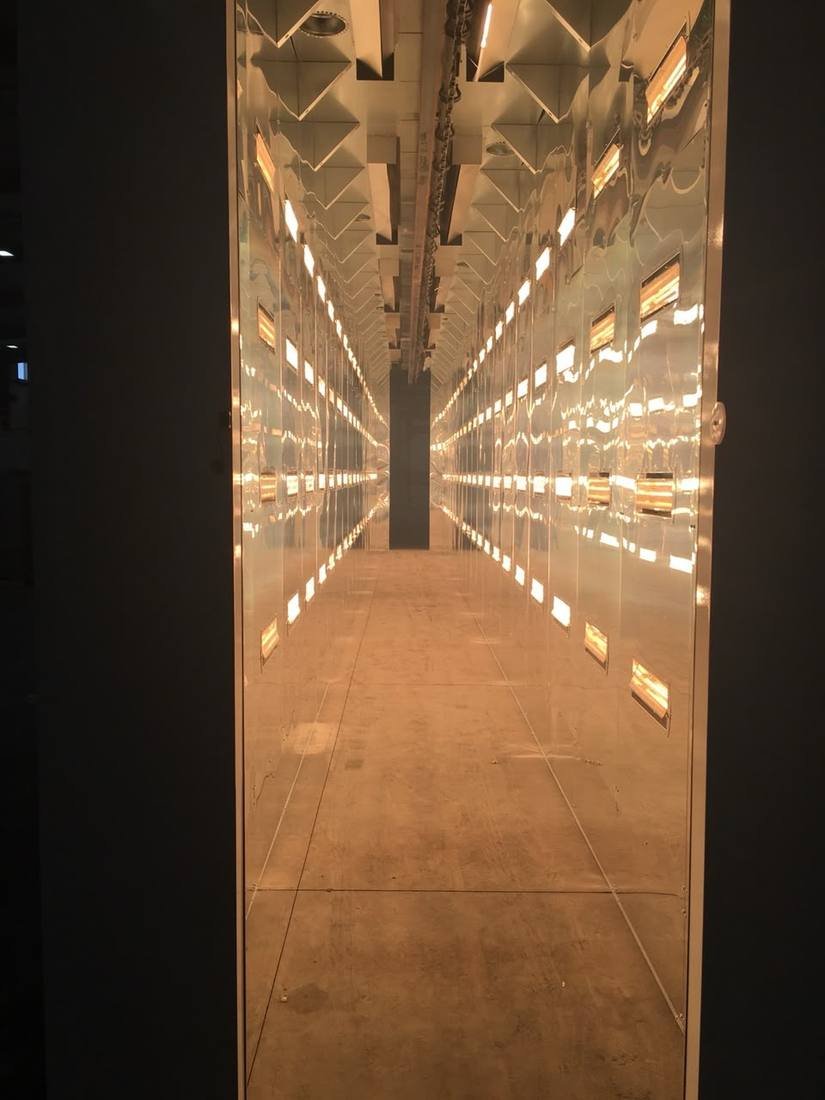
Curing is a critical stage in powder coating. The coating must experience the temperature and time required by its formulation to develop the intended properties.
Under-curing may contribute to inadequate performance, while excessive curing can affect appearance or other coating characteristics, depending on the material.
A common mistake is to assume that the oven's air temperature accurately represents the temperature experienced by every component. Part size, thickness, loading patterns, conveyor speed and oven performance can all influence the actual thermal cycle.
**How manufacturers can prevent it**
Verify the curing requirements using the coating manufacturer's technical data. Where necessary, conduct an appropriate temperature-profiling exercise to establish how long representative components take to reach the required metal temperature.
Review conveyor speed, oven loading, airflow and the condition of heating and control equipment. Consider whether changes in product dimensions or production volume have affected the existing curing process.
Avoid making temperature or conveyor-speed adjustments without evaluating their effect on the entire production system. Any corrective action should preserve the coating's specified processing requirements.
8. A Practical Method for Diagnosing Powder Coating Defects
When a defect appears, the fastest-looking solution is not always the most effective one. Changing several settings at once can make it difficult to identify the actual cause and may introduce additional quality problems.
A more disciplined approach includes the following steps:
**Step 1: Describe the defect accurately.** Record what the defect looks like, where it appears and whether it affects the entire component or only specific areas.
**Step 2: Contain affected products.** Identify and separate suspect batches according to the facility's quality procedures. Avoid releasing products until their conformity has been established.
**Step 3: Review the production history.** Check recent changes to materials, equipment settings, maintenance, operators, component preparation and production schedules.
**Step 4: Trace the process upstream.** Investigate the stages that could have created the defect, including preparation, application, curing and handling.
**Step 5: Test likely causes.** Use suitable inspection methods, measurements and controlled trials to evaluate the most plausible explanations.
**Step 6: Change one relevant variable group at a time.** Record the adjustment and its outcome so that the team can distinguish effective corrections from assumptions.
**Step 7: Verify and standardise the result.** Confirm that the correction works under representative production conditions, then update procedures and training where necessary.
This method supports better decisions because it focuses on evidence rather than repeatedly adjusting equipment in response to symptoms.
9. When Repeated Defects Indicate a Bigger System Problem
Some coating defects can be corrected through routine maintenance, process adjustments or improved operator practices. Others may reveal limitations in the finishing system itself.
For example, persistent coverage problems may indicate that the application equipment is poorly suited to the component geometry. Repeated curing issues may point to insufficient process control or limitations in the oven. Growing rejection rates across multiple products may indicate that the production process needs a broader evaluation.
Manufacturers should pay attention to patterns such as:
- The same defect recurring after several corrective attempts.
- Quality problems appearing across multiple shifts or product types.
- Increasing rework despite routine maintenance.
- New products that the existing equipment struggles to process consistently.
- Production demands that exceed the finishing line's practical capabilities.
When these patterns occur, evaluating the overall system can be more useful than treating every defect separately.
Explore
CMC Consultants LLC's industrial finishing expertise to learn more about the areas involved in evaluating and improving paint finishing operations.
10. Turning Defect Reduction into a Continuous Improvement Process
Preventing coating defects should be an ongoing part of manufacturing operations rather than an activity performed only when customer complaints arise.
A practical improvement programme should track defect categories, rejection rates, rework hours, material consumption and production downtime. These indicators can help the team identify recurring problems and determine whether corrective actions are delivering measurable improvements.
It is also important to involve the people who work with the system every day. Operators, maintenance personnel, quality teams and production managers may each have useful information about changes in equipment behaviour or process performance.
Training, preventive maintenance and clear operating procedures help ensure that successful corrections are sustained. Periodic process reviews can then identify new risks as products, materials and production volumes change.
The objective is not simply to produce a visually acceptable finish. It is to establish a reliable process that consistently meets the required quality specifications while supporting efficient production.
How CMC Consultants LLC Can Help
Recurring powder coating defects can have several possible causes, and the correct solution depends on the materials, equipment, products and operating conditions involved.
CMC Consultants LLC provides industrial paint finishing system design, process optimisation and technical consulting to support manufacturers evaluating their finishing operations.
Whether your facility is dealing with inconsistent coating quality, process bottlenecks, equipment limitations or the need to assess improvements, a structured evaluation can help clarify the issues that deserve attention.
Rather than making assumptions based on the appearance of a defect alone, manufacturers can benefit from examining how the individual stages of the finishing process work together.
To discuss your industrial paint finishing requirements, visit
CMC Consultants LLC's services page or
contact the team to request a consultation.
A better understanding of the finishing process is an important step toward more consistent quality, less rework and a more reliable production operation.
Frequently Asked Questions
What causes the most common industrial powder coating defects?
Common causes include inadequate surface preparation, contamination, inconsistent powder application, poor grounding, unsuitable film thickness and curing conditions that do not meet the coating manufacturer's requirements. The actual cause should be established through inspection and testing.
Can powder coating defects be prevented completely?
Not every defect can be eliminated under every production condition, but effective process control, preventive maintenance, suitable materials and consistent inspection can reduce the likelihood of recurring problems.
Why does powder coating peel off metal?
Peeling can be associated with inadequate cleaning, unsuitable pretreatment, contamination, poor adhesion or curing problems. Testing and reviewing the process are necessary to identify the cause in a particular case.
When should a manufacturer evaluate its industrial paint finishing system?
A broader evaluation may be appropriate when defects persist despite corrective action, rework costs increase, production capacity becomes constrained or the existing equipment no longer meets product requirements.
Learn More About Industrial Paint Finishing
For additional guidance on improving industrial finishing operations, explore the
CMC Consultants LLC blog, review the company's
industrial paint finishing services, or
get in touch with CMC Consultants LLC to discuss your requirements.
---
**Technical reference links for editorial review:**
-
PPG Powder Coatings Troubleshooting Guide
-
IFS Coatings Troubleshooting Guide
```html
Share This Article
Found this article useful? Share it with your professional network.
```